Build Your Brand, They Said: How the Creator Economy Turned Passion Into Unpaid Labor
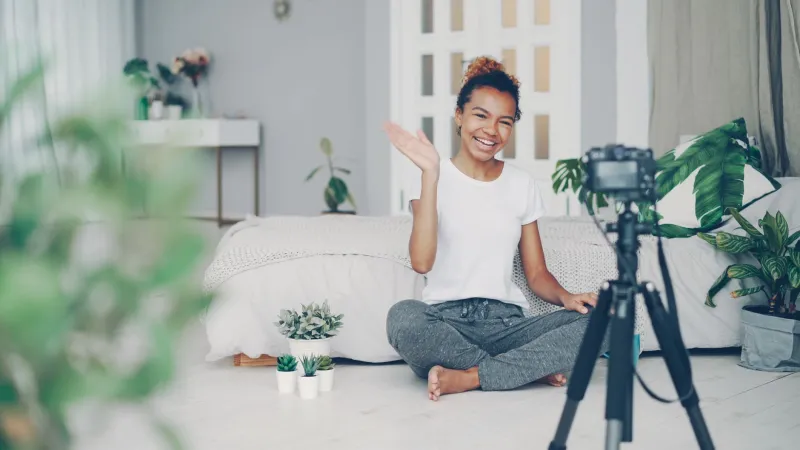
Somewhere around 2015, a particular fantasy took hold of American culture. Regular people — not celebrities, not media executives, just folks with a camera, a niche obsession, and enough free time — were going to get paid to be themselves. YouTube millionaires were buying houses in the suburbs of Los Angeles. Instagram influencers were getting free trips to Bali. TikTok teenagers were reportedly out-earning their parents before their high school graduation.
The platforms encouraged this narrative enthusiastically, because every person who believed it was a potential content producer, and every content producer was free labor generating the raw material that platforms then sold to advertisers.
That's the part of the pitch deck they left out.
The Recruitment Drive
To understand how the creator economy became what it is, you have to understand what it was selling at the start: disintermediation. The beautiful, radical idea that you no longer needed a record label, a publishing house, a TV network, or a talent agent. The platform was the distributor, the algorithm was the gatekeeper, and if your content was good enough — authentic enough — the audience would find you.
YouTube ran actual advertising campaigns in Times Square featuring creator success stories. TikTok launched its 'Creator Fund' in 2020 with a breathless announcement of $200 million dedicated to paying creators, with promises to scale to $1 billion. Instagram pushed Reels with financial incentive programs, dangling bonus payments in front of creators to pull them away from TikTok.
It worked spectacularly. By 2023, estimates put the number of people who identify as professional content creators in the US at somewhere north of 50 million. Fifty million people who have structured meaningful portions of their lives — their time, their finances, their identities — around platforms they do not own and cannot control.
And Then the Terms Changed
Here's the thing about building your business on someone else's platform: they own the building.
YouTube's monetization rules have been revised so many times that veteran creators maintain spreadsheets tracking policy changes the way day traders track stock prices. The 'adpocalypse' of 2017 — when major advertisers pulled spending after their ads appeared next to extremist content — resulted in sweeping demonetization that wiped out income for thousands of creators who had done nothing wrong. The platform's response was to make monetization criteria stricter and the appeals process opaque.
TikTok's Creator Fund, that billion-dollar promise? Creators who joined it almost universally reported that their per-view earnings dropped dramatically once they were enrolled — some reporting rates as low as two to four cents per thousand views. The fund was eventually rebranded as the 'Creativity Program Beta,' with new eligibility requirements that excluded many of the smaller creators the original fund had supposedly been designed to support.
Instagram's algorithm shifts are practically a genre of content at this point. Creators who built followings on static photography watched the platform pivot to video. Creators who pivoted to video watched it pivot to Reels. Creators who mastered Reels are now being told that 'authentic, unpolished content' is what the algorithm rewards — which is, delightfully, exactly what the platform claimed to reward in 2012 before any of this got complicated.
The Algorithmic Treadmill
What makes the creator economy uniquely punishing isn't just that the rules change. It's the pace at which creators must produce content to stay visible.
Algorithms on every major platform are designed to prioritize recency and engagement velocity. A creator who posts three times a week and gets consistent engagement will outperform one who posts a single brilliant piece of content once a month. The system structurally rewards volume, which structurally punishes anyone who wants to, say, sleep, or take a vacation, or have a creative block without it costing them 40% of their reach.
Creator burnout has become so common it's practically its own content genre. Videos titled 'I need to take a break' or 'Why I've been gone' are among the most reliably high-performing pieces many creators ever publish — which is its own kind of dark joke. The platform rewards you most generously for announcing how badly the platform is treating you.
Psychologists who study occupational stress have noted that the creator economy combines several particularly toxic workplace dynamics: performance metrics that are constantly visible and emotionally loaded, income that is unpredictable and algorithmically determined, an audience that conflates the creator's work with their personal identity, and zero institutional support structures like HR departments, unions, or employment protections.
The Independence That Wasn't
The cruelest irony of the creator economy is that it promised to replace the gatekeepers of traditional media and instead installed new ones that are simultaneously less visible and more powerful.
A record label might drop an artist, but the artist can sign with another label. A creator whose channel gets demonetized, shadowbanned, or algorithmically deprioritized has no equivalent recourse. There's no competing algorithm to appeal to. There's no appeals court. There's a help center with a chatbot and a community forum full of other creators who are equally confused.
Meanwhile, the platforms have quietly shifted their creator economy pitch from 'you can make a living doing this' to 'build your brand' — a phrase that means nothing and costs the platform nothing. Your brand is your problem. The platform just hosts it, takes its cut, and changes the rules whenever it's financially convenient.
What Comes After the Gold Rush
The creator economy isn't going away. But the mythology around it is finally fraying at the edges.
Creator unions have started forming — the American Guild of Musical Artists has made moves in this direction, and there are ongoing conversations about collective bargaining for digital creators that would have seemed absurd ten years ago. Platforms like Substack and Patreon, which take a percentage of direct subscriber revenue rather than selling advertising, have attracted creators specifically because the value exchange is legible and relatively stable.
None of this undoes the decade-long bait-and-switch. Millions of people restructured their professional lives around a promise that was always contingent on platform priorities, not creator welfare.
The dream of independence turned out to have a terms-of-service agreement. And like every terms-of-service agreement, nobody read it until it was too late.