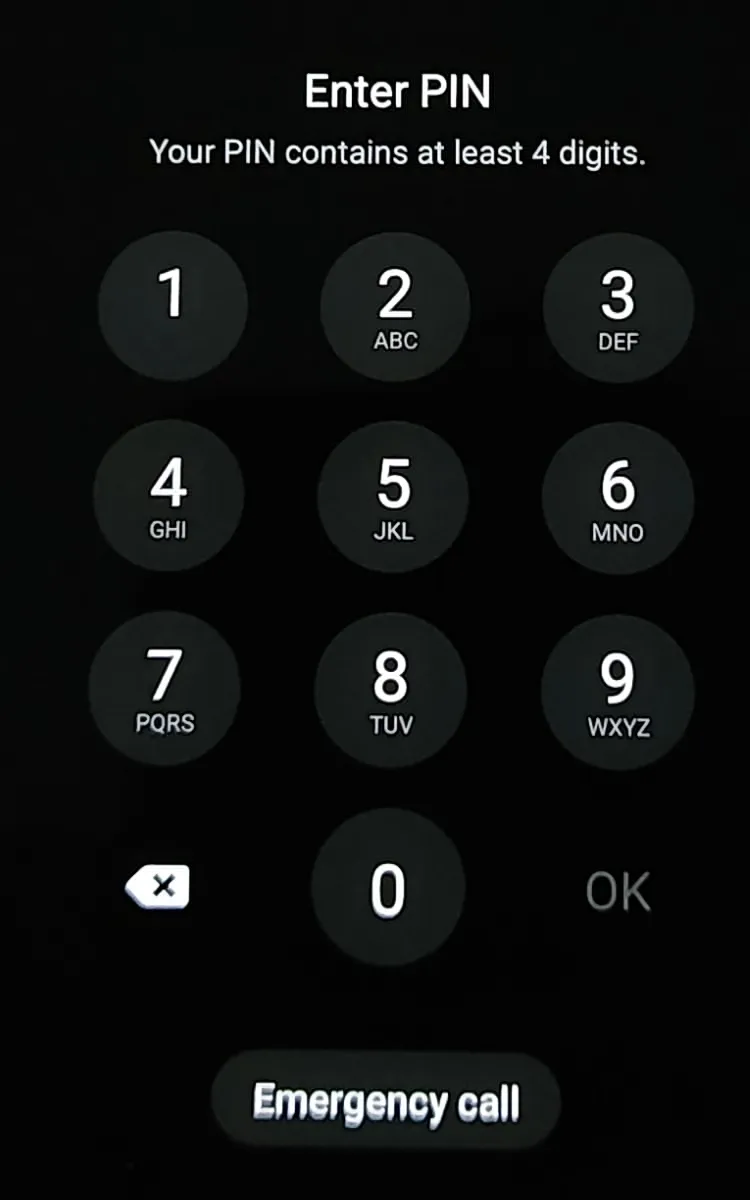
Photo: Mykhal, CC0, via Wikimedia Commons
Nobody warns you that grief comes with a password reset form.
When someone dies in America, the paperwork is brutal but legible: a dozen death certificates, the funeral home, the bank, Social Security, the 401(k) transfer, a probate lawyer who bills in six-minute increments. Grim, but at least it is a list. Then comes the part nobody puts on the list, which is the phone.
The phone is locked. The photos are not on the phone anyway — they live in a cloud account tied to an email address tied to a password nobody knows, tied to a phone number the carrier will recycle within weeks. Somewhere in there are forty years of pictures, the only copy of a scanned wedding portrait, and a text thread with a dead sister that nobody has the heart to delete and nobody has the credentials to save.
The cloud is a storage unit with no door
We spent two decades moving our lives into accounts we do not own, governed by terms we did not read, protected by authentication we cannot hand to anyone else. Two-factor codes go to a phone. Recovery emails go to another account. The entire architecture assumes you will always be alive to answer the door.
Statistically, that is a bad assumption. The platforms know it too, because they have spent years building features for exactly this — features with names like Inactive Account Manager and Digital Legacy, which sound like estate planning and function like retention tools wearing a black armband.
Memorialize is a button, not a plan
Facebook will memorialize an account if you can prove its owner has died. A legacy contact can update the profile picture, pin a post, and — if the deceased permitted it — download a copy of the data. Instagram offers a thinner version of the same. Neither outcome gets you the inbox.
Google's Inactive Account Manager is the closest thing to a real plan: set a timeout somewhere between three and eighteen months, name up to ten people, decide what each of them can see. It is genuinely good design. It is also buried four menus deep in a settings page you have never opened, which is why most users have never touched it and never will.
Apple's Digital Legacy runs on a different model: you name contacts, they receive an access key, and with a death certificate they can request the data. Sensible. Terrible awareness. Ask ten iPhone owners what a legacy contact is and enjoy the silence.
The pattern holds everywhere. The tools exist, they ship switched off, and the marketing budget points somewhere else entirely.
The safest user is an inactive one
Here is the cynical read, and it happens to be the correct one. A dormant account is a beautiful thing for a platform. It counts toward the user number. It generates no support tickets, no moderation cost, no bandwidth spike. It sits quietly holding storage and history while the quarterly report says billions of monthly active users and nobody in the room asks how many of them are breathing.
Storage is the part nobody mentions. Photo libraries grow forever, and they grow fastest after someone stops taking new pictures. If a company is holding a decade of a stranger's life at no charge, its incentive is not to hand it back. It is to keep the account open, keep the data, and let the survivors bounce between a help center article and a form that wants a court order.
Which is where the law arrives, late and out of breath.
What the law says, in one unhelpful sentence
Most states have adopted some version of the Revised Uniform Fiduciary Access to Digital Assets Act, which lets an executor request access to a deceased person's accounts — if the service's own terms allow it. Notice the conditional. The statute hands you a key, then points at a terms-of-service page that frequently says no.
The practical result varies by zip code. An executor in one state may walk away with the photos. An executor in another gets a courteous email explaining that the account has been deactivated, which is corporate for gone, and the backup tape was overwritten in March.
Meanwhile the terms you agreed to in 2011 still govern what happens in 2071, assuming the company survives that long. A large share of the services we relied on a decade ago no longer exist. Your data's survival plan is a company's survival plan. Those are not the same plan, and only one of them has a lawyer.
The very short checklist platforms hope you skip
- Name a legacy contact in every app that offers one. It takes nine minutes. Do it now, while you are thinking about it, because you will not think about it again.
- Store credentials in a password manager and give exactly one trusted person emergency access. Yes, that person. The one who will not read your texts.
- Write down an account inventory — email, cloud, banks, subscriptions, the domain you bought at 2 a.m. — and leave it somewhere a human can find it.
- Cancel the phone number last. Nearly every account recovery flow on earth points at it.
- Tell someone what you want done with the accounts. Delete everything is a valid instruction, and it is far easier than the default, which is persist indefinitely in a data center in Iowa.
None of this is fun, and none of it fits on a sympathy card. But the alternative is what we have built: a digital afterlife that is less an afterlife than a storage locker — paid for by nobody, opened by no one, quietly decaying under terms of service that outlive the body.
The internet has no funeral plan for you. It has a retention strategy. Those are different documents, and only one of them mentions your family.