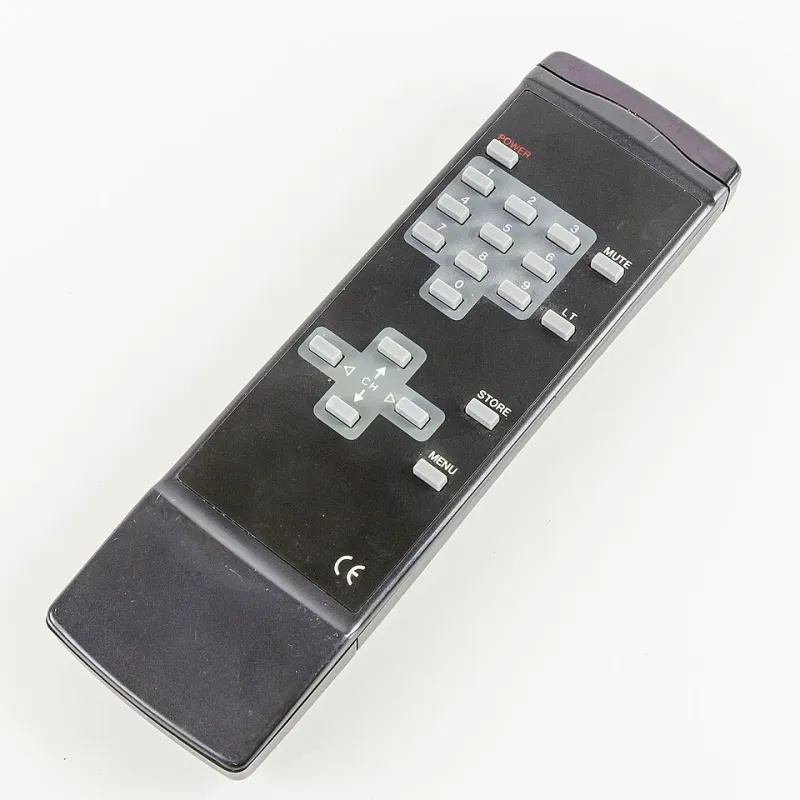
Photo: Raimond Spekking, CC BY-SA 4.0, via Wikimedia Commons
Six years ago you did the brave thing. You called the cable company, sat on hold for forty minutes to a loop of smooth jazz, threatened to cancel, got transferred to retention, threatened again, and finally freed yourself. You felt like a revolutionary.
Today you pay for four streaming services, a sports add-on, a bundle you cannot untangle, and an ad-supported tier you upgraded away from out of pure irritation. Your monthly total is suspiciously close to what the cable company wanted in 2019. The only real difference is that you now manage six passwords and one annual renewal you always forget.
You rebuilt cable. In your own home. With your own money. The font is nicer.
The pitch versus the pivot
Streaming sold itself on three promises: no commercials, everything in one place, and pay only for what you watch. Two of those were structural, and structure is expensive. The third was always a lie, because the entire business model depends on you paying for shows you never open.
So the promises eroded in order of cost. First the libraries split into a dozen services as studios pulled their catalogs home. Then the prices climbed, quietly, a dollar at a time, in emails titled updates to your plan. Then came the ads, not as a punishment but as a discount that sounds generous until you do the arithmetic.
Do the math on the ad tier
Here is the trade as it is presented: watch a few commercials, save a few bucks a month. Here is the trade as it actually works: an hour of ad-supported streaming now carries something in the neighborhood of several minutes of commercials, and ad load has been climbing every year since these tiers launched. The trajectory is a straight line pointing at the old cable standard, which was around sixteen minutes of ads per hour.
Do the math on your own time. If you watch two hours a night, an extra four minutes of advertising per hour comes to roughly two full days of commercials a year. Two days. You sold them for the price of a burrito.
And you did not get the downloads, or the 4K, or the simultaneous streams, because the cheap tier also removed the things that make the service usable. The discount is not a discount. It is a downgrade with a coupon taped to it.
Tiers are a mood board, not a price list
The names have been changed to protect the guilty. The structure has not.
| What it is called | What it sounds like | What it is |
|---|---|---|
| Basic with Ads | Almost free | Cheapest price, no downloads, ads, one screen, no HD on some titles |
| Standard | Normal | The real price, plus a fee nobody mentioned at signup |
| Premium | The good one | Everything, if your television supports it, which it may not |
| Annual | Smart shopper | Same money, but now cancellation is a customer service conversation |
Four names, four price points, and a feature matrix that changes without notice in a way that always favors the company. The point of a tier system is not to give you choice. It is to make the comparison exhausting enough that you pick the middle one and stop thinking.
The interface is the punishment
Open the app. Autoplay trailer. Autoplay trailer. A row labeled because you watched one documentary in 2022. A row labeled trending, which means promoted. The thing you actually want is in a category called something like spotlight, four rows down, next to a tile for a show that left the service eight months ago and still has its artwork up.
Now try to cancel. The account page hides behind the profile icon, which is not where account pages live anywhere else on the internet. The cancel button is grey. It offers you a pause instead, then a downgrade, then a survey about why you are leaving, then a confirmation screen with the keep my plan button in brand colors and the finish cancellation link in nine-point grey.
Every one of those steps is a design decision made by a person who was paid to make leaving harder than staying. That is the cable playbook, executed pixel by pixel.
Bundle debt is the new two-year contract
Cable had a hook: the promotional rate that expired while you were not looking. Streaming has refined it. Sign up for a bundle, get a discount on the bundle, discover that the discount applies to one component and expires, and that removing any single piece raises the price of the rest.
Add a live sports tier because of one game. Add a channel add-on because your partner wanted it. Add the annual plan because the monthly price went up. Within a year you have assembled something with the exact emotional texture of a cable bill: too complicated to audit, too entangled to cancel cleanly, and quietly increasing.
Cord-cutting was a rebrand
None of this means cable was good. It means the model was never really about the wire. The wire was just where the money got collected.
The model was always: bundle things people do not want with the one thing they do, charge rent on the box, make leaving annoying, and raise the price on a schedule nobody announces. Streaming kept every part of that and replaced the box with an app store login.
You did not escape. You migrated to a worse-defended version of the same territory, and then the territory built walls.
The escape hatch, if you want one
- Rotate. Subscribe to one service at a time, finish the show, cancel, move on. It is mildly annoying and it is the only leverage you have.
- Never take the annual plan on a service you have not used for three consecutive months.
- Set a calendar reminder for every renewal date. The forgetfulness is the product.
- Audit once a year and write down what you actually watched. The gap between what you pay for and what you watch is the entire industry's profit margin.
- When the cancel flow gets hostile, remember it is not a bug. It is the last feature they shipped.
Cable died and came back wearing a different interface, and it charges you more for the privilege of feeling modern. The commercial break never left. It just learned to load first.