So You Want to Read an Article: That'll Be $14.99, Plus the Other $14.99
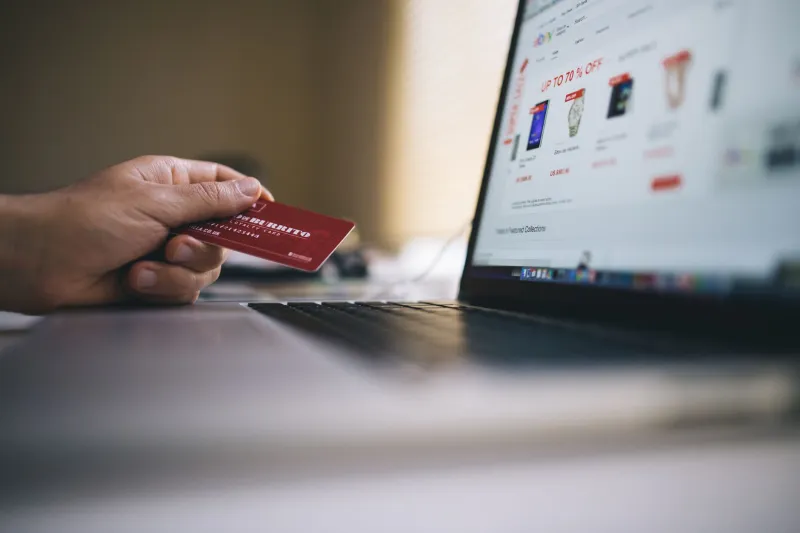
Let's say you wake up on a Tuesday morning and you want to be informed. Normal enough ambition. You've got a cup of coffee, fifteen minutes, and a genuine curiosity about what's happening in the world. You open your browser.
The New York Times wants $17 a month. The Washington Post will take $10. Your local paper — if it still exists — is asking $8.99 for digital access. The Atlantic has a paywall. Wired has a paywall. Bloomberg will let you read two articles before it pulls the curtain and starts describing, in vivid detail, what you're missing. The Wall Street Journal will not even pretend to be coy about it. Substack newsletters from writers you used to follow for free now have tiered subscription models with a "founding member" option that costs more than your gym membership.
By the time you've navigated the free-article limits, dismissed three different "subscribe to continue" modals, and closed a chat widget asking if you need help paying for the privilege of reading, your coffee is cold and you know roughly nothing new.
Welcome to the modern information economy. Please have your credit card ready.
How We Got Here: The Great Unraveling
The early web made a promise that felt almost utopian: information would be free. Not free as in subsidized by someone else's money — free as in available, accessible, egalitarian. The idea that a kid in rural Ohio could read the same news as a Manhattan executive felt genuinely revolutionary. The internet was going to be the great equalizer.
Then advertising came in and ruined everything, and then the backlash to advertising came in and ruined everything differently.
Here's the compressed version of two decades of dysfunction: publishers gave content away and funded it with ads. Ads got more invasive. Users installed ad blockers. Revenue collapsed. Publishers panicked. Facebook offered to distribute their content for free, took most of the traffic value for itself, and then algorithmically deprioritized news when it became politically inconvenient. Google ate the search-driven traffic. And somewhere in the wreckage, every publication simultaneously decided that subscriptions were the answer.
They weren't wrong, exactly. Subscriptions do generate revenue. The problem is that roughly four hundred publications all had this epiphany at the same time.
The Math That Nobody Wants to Do
Let's do the math that nobody wants to do.
If you subscribed to a modest selection of quality publications — one national newspaper, one local paper, one magazine, one tech outlet, one long-form journalism site, and a couple of newsletters from writers whose work you actually value — you are probably looking at somewhere between $80 and $150 a month. That's before streaming services, before software subscriptions, before the cloud storage you definitely need but keep meaning to audit.
For a lot of American households, that's not a trivial number. For a significant portion of the country, it's simply not possible. Which means the paywall model, however economically rational it is from the publisher's perspective, has a built-in class structure. The well-informed citizen is now, by design, the one who can afford to be.
This is not a small irony. This is a foundational failure of what the web was supposed to be.
The Paywall Maze Is Also Just Badly Designed
Even setting aside the affordability question — and we really shouldn't set it aside — the actual user experience of navigating a paywalled web is aggressively, almost impressively bad.
Article limits are tracked inconsistently. Clearing your cookies sometimes works, sometimes doesn't, and sometimes causes the site to recognize you anyway through fingerprinting. Some sites let you read in incognito mode; others specifically block it. Some paywalls are soft and negotiable; others drop immediately on the first click. Some publications have student discounts, or public library partnerships, or introductory offers — but these are buried under three layers of navigation and a newsletter signup.
The result is a web where accessing information requires a combination of technical knowledge, institutional access, and disposable income that most users simply do not have. And rather than designing around this problem, most publishers have optimized their paywall UX to maximize friction for anyone who isn't already subscribed. The modal is the message: you don't belong here without a credit card.
The Bundling Fantasy
The obvious solution, which various parties have been discussing for about fifteen years without meaningful progress, is bundling. One subscription, many publications, revenue distributed based on readership. Apple News+ exists in a form of this. It is fine. It is also not the New York Times, which refused to join it, because the Times correctly calculated that its brand is strong enough to extract individual subscriptions directly.
And that's the problem with bundling as a solution: it requires every major publisher to agree to terms that inevitably benefit some of them less than going it alone. The ones with the most leverage — the ones whose inclusion would make the bundle worth having — are the ones with the least incentive to participate. So the bundle never materializes, or materializes in a weakened form, and users continue to manage a dozen separate subscriptions like they're running a small procurement department.
Who Actually Benefits
Follow the money, and it doesn't go where you'd expect.
Small independent journalists on Substack can and do build sustainable businesses through direct subscriptions. That part works. But the big institutional beneficiaries of the paywall era are the publications that already had massive brand recognition before the model shifted — outlets that could survive the traffic losses because their audience was loyal enough to pay. Everybody else is caught in a miserable middle: too big to survive on donations, too small to command the subscription loyalty that makes the math work.
Local news is the clearest casualty. Local papers have been dying for two decades, and the paywall hasn't saved most of them — it's just added a revenue stream to a sinking ship. The communities that most need accountability journalism are the ones least able to fund it through subscriptions, because their residents have lower incomes and their advertisers were already gone.
The Information Toll Booth at the End of Every Road
The web's original sin wasn't giving information away for free. It was never building a sustainable model for paying the people who produced it. The pendulum has now swung so hard in the other direction that we've built a system where information is theoretically abundant but practically inaccessible — locked behind enough paywalls that navigating them has become its own kind of expertise.
Somewhere between "information wants to be free" and "information costs $14.99 a month plus tax," we lost something that mattered. The internet was supposed to be a library. We turned it into a mall with a cover charge at every door.
The internet is broken. We took notes. Unfortunately, the notes are behind a paywall.