Buzz, Ding, Repeat: The Psychological Trap Hidden in Every Notification You Get
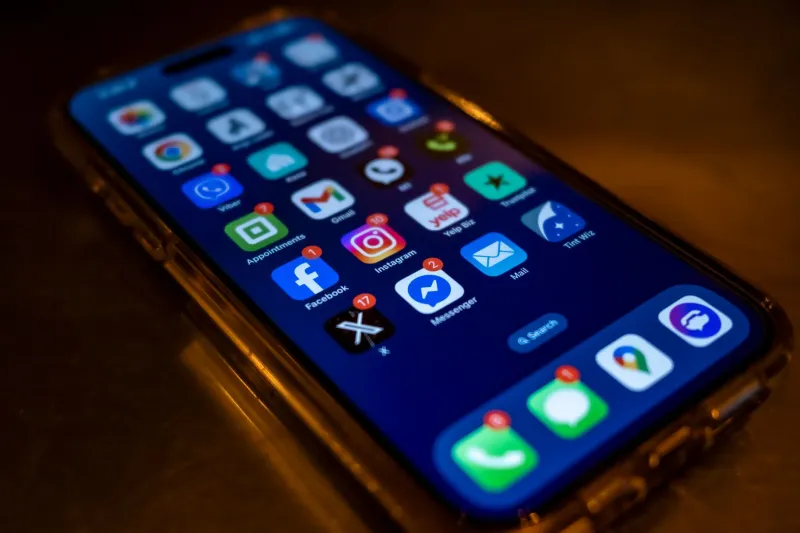
Your phone just buzzed. You know it did. You felt it, or maybe you thought you felt it — a phantom tremor in your pocket that turns out to be nothing. You checked anyway. Of course you checked. That's not a personal failing. That's a feature.
Somewhere between the invention of push notifications in 2009 and right now, the humble alert — a useful little tap on the shoulder to tell you something genuinely mattered — mutated into an industrial-scale attention harvesting operation. What was once a tool became a leash. A very short, very vibrating leash.
Welcome to the notification industrial complex. Population: you, staring at your lock screen at 2 a.m. because LinkedIn told you someone viewed your profile.
The Origin Story Nobody Asked For
Push notifications started with the best of intentions, which is how most internet disasters begin. Apple's Push Notification Service launched in 2009, giving developers a way to reach users even when an app wasn't open. The pitch was elegant: instead of your phone constantly checking servers for updates and draining its battery, apps could receive a tap from the mothership whenever something actually happened.
For about fifteen minutes, this was fine. You got a text. Your alarm went off. Reasonable stuff.
Then the marketing departments got involved.
By the early 2010s, every app with a download count above zero had discovered something intoxicating: notifications drove engagement. Send a ping, get a tap. Get a tap, rack up a session. Rack up a session, show an ad or surface a purchase or just log another daily active user to impress investors. The math was simple enough that even a growth hacker could do it, and they absolutely did.
The Slot Machine Isn't a Metaphor, It's a Blueprint
Here's the part where we're obligated to mention B.F. Skinner, because no article about digital addiction is legally allowed to skip him. Skinner's research on variable ratio reinforcement — the psychological principle that makes slot machines so devastatingly effective — established that unpredictable rewards produce the most compulsive behavior. You don't pull the lever because you know you'll win. You pull it because you might.
Your notification feed is engineered on exactly this principle. Sometimes that buzz is a text from someone you love. Sometimes it's a promotional email from a mattress company you bought from three years ago. You can't know until you look. And because the good ones feel really good, your brain keeps paying the tax of checking for the bad ones.
Silicon Valley did not stumble into this accidentally. Former Google design ethicist Tristan Harris spent years inside the machine before going public about how deliberately these systems are built. Notification timing isn't random. The algorithms that decide when to ping you are tuned to catch you at moments of likely weakness — early morning, late evening, the quiet Tuesday afternoon when you're most susceptible to distraction. Your boredom is a resource. These companies have just gotten very good at harvesting it.
The Permission Theater
Every app, when you first install it, performs a little ritual. It asks if it can send you notifications. You can say no. Technically. In practice, the interface is designed to make yes the path of least resistance. The "Allow" button is big and blue and right there. "Don't Allow" is smaller, grayed out, and positioned like an afterthought — a fire exit you're not supposed to actually use.
And if you do say no? Some apps will ask again later. And again. Framing it differently each time, like a toddler who's learned that persistence occasionally defeats parental resolve. "We just want to make sure you don't miss anything important." Important to whom, the app does not clarify.
This is Web Design doing what Web Design does when it has abandoned any pretense of serving the user: it optimizes for compliance. The interface isn't broken. It's working exactly as intended. You are the variable being optimized.
Why Turning Them Off Feels Like Self-Harm
Here's the genuinely weird part. Most people, if asked, will tell you notifications stress them out. Studies on this are not hard to find — researchers at UC Irvine have documented that it takes an average of 23 minutes to fully regain concentration after an interruption. Other research has linked heavy notification use to elevated cortisol levels, the stress hormone your body produces when it thinks a bear might be nearby.
And yet. The notification settings on the average American smartphone look like a city that's never heard of zoning laws. Everything is allowed. Everything is loud.
Part of this is FOMO operating at a systemic level. Disabling notifications from a group chat doesn't just mean you miss memes — it means you arrive at conversations already behind, already the person who didn't know. In a social ecosystem where everyone is expected to be perpetually reachable, opting out carries a social cost that feels disproportionately high.
Part of it is also just exhaustion. Managing notification settings requires navigating menus nested inside menus, making individual decisions for dozens of apps, and then repeating the process every time an app update quietly resets your preferences. Which they do. Regularly. Because of course they do.
The Attention Economy Has a Collections Department
What we're really talking about is debt. Not financial debt, but attentional debt — the accumulated cost of every interruption, every context switch, every moment your brain was yanked out of what it was doing and pointed at a screen.
The companies collecting on this debt aren't cartoonishly evil. They're rational actors in an economic system that rewards engagement above everything else. More sessions, more ads, more revenue. The fact that this system is also making people anxious, distracted, and less capable of sustained thought is, in the cold language of quarterly earnings, an externality.
You pay the externality. They keep the profit.
So What Do You Actually Do
The honest answer is: less than you'd hope. The structural incentives aren't going anywhere. Legislation around notification design is essentially nonexistent in the U.S. — we can't even agree on cookie consent rules, so holding our breath for federal attention management standards seems optimistic.
What you can do is treat your notification settings like a budget. Everything gets audited. Most things get cut. The apps that re-enable themselves after updates get deleted without ceremony. The group chats that aren't load-bearing get muted indefinitely. Your phone goes face-down at dinner not as a social statement but as a survival strategy.
None of this fixes the machine. It just means you're slightly less useful to it.
Your phone buzzed again while you were reading this. We know. We saw it. Go ahead and check — we'll be here when you get back. The internet is broken. We're used to waiting.