You Liked One Cat Video and Now the Algorithm Thinks You're a Different Person
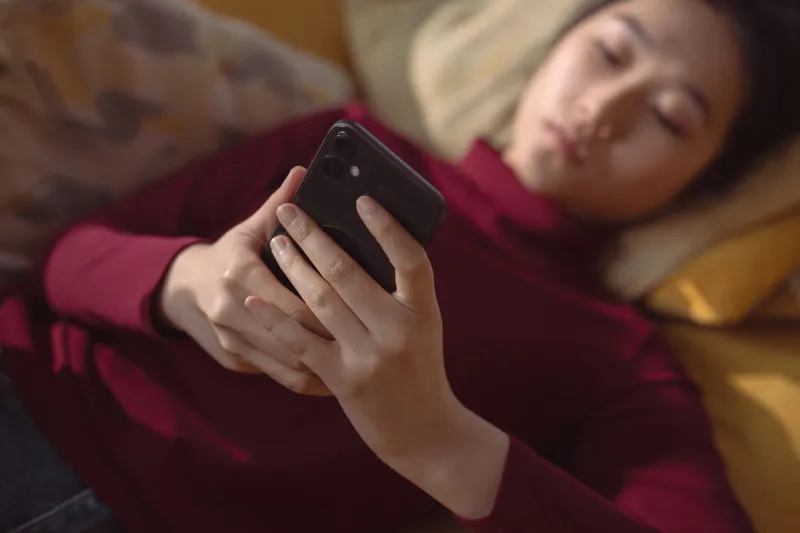
Somewhere between Tuesday afternoon and Thursday morning, Instagram decided you were someone else. You didn't fill out a form. You didn't request the change. You simply made the mistake of pausing on a reel for three seconds too long — maybe it was a video of someone pressure-washing a driveway, maybe it was a golden retriever doing something objectively hilarious — and now your entire feed has been recalibrated around a fictional version of you that the algorithm has invented wholesale.
Welcome to algorithmic drift: the slow, confident, completely wrong process by which social media platforms gradually replace your actual interests with a digital caricature they've constructed from your least intentional moments.
The System Was Supposed to Know You Better Than You Know Yourself
That was the pitch, anyway. Feed algorithms were sold as personalization engines — sophisticated systems that would learn your preferences over time and surface exactly the content you wanted, before you even knew you wanted it. The technology press called it revolutionary. The platforms called it magical. What they didn't mention is that "learning your preferences" and "accurately modeling who you are" turn out to be completely different things.
The algorithm doesn't actually know you. It knows your behavior, which sounds like the same thing until you realize how badly your behavior misrepresents you on any given day. You lingered on a post about sourdough bread because the photo was aesthetically weird, not because you want to become a bread person. You clicked on a video about van life because the thumbnail looked dramatic, not because you're secretly planning to quit your job and drive a converted Sprinter across New Mexico. You watched fifteen seconds of a CrossFit competition because it appeared between two things you actually wanted to see.
The algorithm noted all of this. It drew conclusions. It was wrong about every single one.
Confidence Without Comprehension
What makes algorithmic drift genuinely maddening isn't that the system gets you wrong — it's how certain it is while doing so. There's no hedging, no "we think you might be interested in this." The platform simply starts flooding your feed with content for the person it has decided you are, with the unshakeable conviction of someone who has done absolutely no self-reflection.
This is the uncanny valley of digital identity. The algorithm's version of you is close enough to be plausible but wrong enough to be deeply unsettling. It's like receiving mail addressed to someone with your name who shares your zip code but has entirely different hobbies, politics, and life goals. Except the mail never stops. And it's targeted.
Meta's engineers would tell you this is a feature, not a bug — that the system is responding dynamically to shifts in your engagement patterns. What they're less eager to explain is why those shifts so often lead somewhere you never intended to go, and why course-correcting requires what amounts to a second job.
The Engagement Trap Hiding Inside the Personalization Promise
Here's the part the platforms really don't want to talk about: the algorithm isn't actually optimizing for your satisfaction. It's optimizing for your engagement, which sounds similar but functions completely differently in practice.
Engagement means clicks, watch time, shares, and reactions — any of which can be triggered by content that makes you angry, confused, or anxious just as easily as content that makes you happy or informed. The algorithm doesn't distinguish between "this person watched this video because they loved it" and "this person watched this video because they couldn't believe what they were seeing." Both register as signal. Both inform the next recommendation. Both push you further into a feed shaped by your worst, most reactive moments rather than your considered preferences.
This is why your Instagram can simultaneously feel hyper-personalized and completely alien. It is, in fact, personalized — just to a version of you assembled from your most impulsive, least representative interactions. The algorithm has studied you the way a stranger might study you from across a crowded restaurant: gathering data points, drawing confident inferences, and getting almost everything meaningfully wrong.
The Feedback Loop Nobody Designed an Exit For
Once the drift starts, reversing it is genuinely difficult — and that difficulty is not accidental. Platforms provide nominal controls: you can tell Instagram you're "not interested" in a post, you can mute certain topics, you can try to train the system back toward something resembling your actual self. But these tools are cosmetic. The underlying model has already incorporated your behavior, and a few deliberate taps of "not interested" barely register against weeks of ambient engagement data.
So you're stuck in a feedback loop. The algorithm serves you content for the wrong version of you. You engage with some of it, because you're human and occasionally a video about competitive axe-throwing is just interesting. The algorithm interprets this as confirmation. It doubles down. You are now, officially, an axe-throwing enthusiast in the eyes of a machine that controls what you see.
The only real reset is to stop using the platform entirely for an extended period — which the platform has, naturally, made psychologically difficult to do.
What This Actually Costs You
It would be easy to dismiss algorithmic drift as a minor annoyance, the digital equivalent of a streaming service that keeps recommending movies you'd never watch. But the stakes are higher than a cluttered feed.
The content you see on social media shapes, in aggregate, what you think is normal, what you think people care about, what you think the world looks like. When the algorithm chronically misreads you, it's not just serving you irrelevant posts — it's constructing an inaccurate map of reality and handing it to you as though it were authoritative. You're not just seeing the wrong content. You're being shown a distorted window onto culture, news, and community that reflects neither your actual interests nor an accurate picture of the world.
That's a meaningful failure for a technology that billions of people interact with daily.
The Person You Never Agreed to Be
At some point, every heavy social media user has the unsettling experience of looking at their feed and not recognizing the person it seems to be designed for. The interests are adjacent but wrong. The tone is off. The whole thing feels like a personalized experience built for a parallel-universe version of yourself who made slightly different choices on a few unremarkable afternoons.
That feeling is the algorithm being honest with you, in the only way it knows how. It has built a model of who you are, it is serving that model faithfully, and the model is wrong.
The internet was supposed to connect you to things that mattered to you. Instead, it's introduced you to a stranger wearing your face and handed you their mail. The stranger gets better content recommendations, probably. You're left explaining to a machine, for the fourteenth time this month, that you don't actually want to watch videos about competitive sourdough.
The algorithm remains unconvinced. It knows who you are.
It just happens to be completely wrong about it.