404: History Not Found — The Slow-Motion Collapse of the Web's Memory
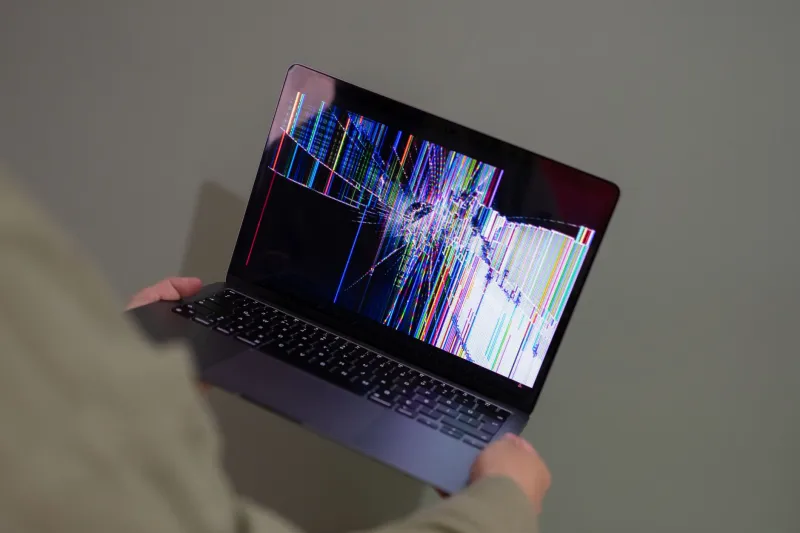
Imagine walking into the Library of Congress, pulling a book off the shelf, flipping to a footnote, and finding that the cited source has been replaced with a sticky note that just reads "This page no longer exists." You'd call that a crisis. You'd demand answers. You'd probably tweet about it until your thumbs fell off.
Now imagine that happening to roughly half of all citations on the internet — quietly, continuously, with no alarm bells, no press conferences, and absolutely no accountability. Welcome to link rot: the internet's most boring catastrophe, and arguably its most consequential one.
What Exactly Is Link Rot, and Why Should You Care?
Link rot is the process by which URLs — those tidy little strings of text that point to specific pages, articles, studies, and resources — stop working over time. The page moves. The domain expires. The company gets acquired. The CMS migration goes sideways. Whatever the cause, the result is the same: a hyperlink that once connected you to real information now deposits you at a 404 error page, a domain squatter's paradise, or — perhaps worst of all — a completely different piece of content wearing the old URL's clothes.
A 2021 study by the Pew Research Center found that roughly 25% of all links on web pages had rotted away. A separate analysis by Harvard Law School's Perma.cc project found that about 50% of URLs cited in Supreme Court opinions no longer point to the originally referenced content. Supreme Court opinions. The foundational legal documents of the United States are sitting on a crumbling digital foundation, and the judicial system's response has largely been a collective shrug.
Academic journals are just as bad. Studies get published. They cite sources. Those sources live on university servers that get reorganized every five years by a new IT administrator who wasn't there when the old structure was built. The original research doesn't disappear, exactly — it just becomes inaccessible to anyone who doesn't already know where to look. Which, for most readers, amounts to the same thing.
News Archives: The Industry That Ate Its Own History
If academic link rot is depressing, news archive rot is genuinely enraging. Major American media outlets — the kind that pride themselves on being the first draft of history — have a stunning habit of quietly deleting, restructuring, or paywalling their own archives in ways that break every external link pointing to them.
Consider what happens during a CMS migration. A news organization decides to upgrade its content management system, which is reasonable. In the process, URL structures change. Old slugs get retired. Redirects are set up haphazardly, if at all. Within months, years' worth of articles that were cited by bloggers, researchers, Wikipedia editors, and other journalists become dead ends. The original reporting still technically exists somewhere in the organization's database. It's just no longer findable by anyone who doesn't have direct access to that database.
Wikipedia, to its credit, has become almost obsessive about flagging dead citations. Browse any moderately detailed Wikipedia article and you'll find a graveyard of "[dead link]" notations — each one a small tombstone marking a reference that once existed and now doesn't. The volunteer editors do their best, swapping in archived versions from the Wayback Machine when they can. But they're essentially doing archaeological fieldwork on a civilization that's still alive and actively bulldozing its own ruins.
The Wayback Machine Is Heroic, But It's Not Enough
The Internet Archive's Wayback Machine — that beautiful, underfunded, non-profit monument to digital preservation — has been crawling and saving web pages since 1996. It currently holds over 800 billion web pages. It is, without exaggeration, one of the most important cultural preservation projects in human history, and it runs on donations.
But the Wayback Machine has real limitations. It doesn't capture everything. It can't archive content that's behind paywalls or login screens. It struggles with dynamically generated pages. And it operates in a legal gray area that major content owners occasionally try to exploit — as several major publishers demonstrated when they sued the Internet Archive over its digital lending practices, a fight that ended badly for the Archive in 2024.
The point isn't that the Wayback Machine is failing. The point is that we've outsourced the entire burden of preserving the web's history to a single non-profit organization operating on goodwill and crowdfunding, while the commercial entities that actually create most of the content treat their own archives as afterthoughts or, worse, as liabilities.
Why Nobody Fixes This
The uncomfortable truth about link rot is that it's not really a technical problem. It's an incentive problem. Maintaining stable URLs costs money — engineering time, server resources, redirect infrastructure. It generates zero revenue. There's no metric that goes up when your 2009 article URLs still work in 2025. There's no quarterly earnings call where the CFO celebrates the fact that nothing broke.
For most commercial web publishers, the calculus is simple: the cost of maintaining URL stability forever is real and ongoing, while the cost of letting links rot is diffuse, invisible, and falls almost entirely on other people. Researchers who can't find their sources. Journalists who can't verify old claims. Historians who find the digital record full of holes. These are not the publisher's customers, and their inconvenience does not show up on any dashboard.
Government agencies are somehow even worse at this than commercial publishers, which is a remarkable achievement. Federal and state government websites undergo redesigns, domain consolidations, and platform migrations with a regularity that would be impressive if the results weren't so consistently catastrophic for anyone trying to reference official information from more than a few years ago.
The Stakes Are Higher Than They Look
This might all sound like a niche concern — something for librarians and academics to fuss over while the rest of us scroll through our feeds. But the long-term implications of a degrading digital historical record are genuinely serious.
Misinformation thrives in the gaps left by dead links. When the original source is gone, the claim floats free of its context, its caveats, its corrections. Bad actors know this. There's a documented practice of letting domains expire, then re-registering them and replacing legitimate content with misinformation — so that old citations now point to something that actively contradicts what the original author wrote.
We built a civilization on a network that was designed to be resilient against physical destruction but apparently not against neglect, budget cuts, and routine corporate indifference. The web was supposed to be a permanent record. Instead, it turns out to have roughly the archival permanence of a whiteboard in a conference room.
Somebody will erase it. They always do.